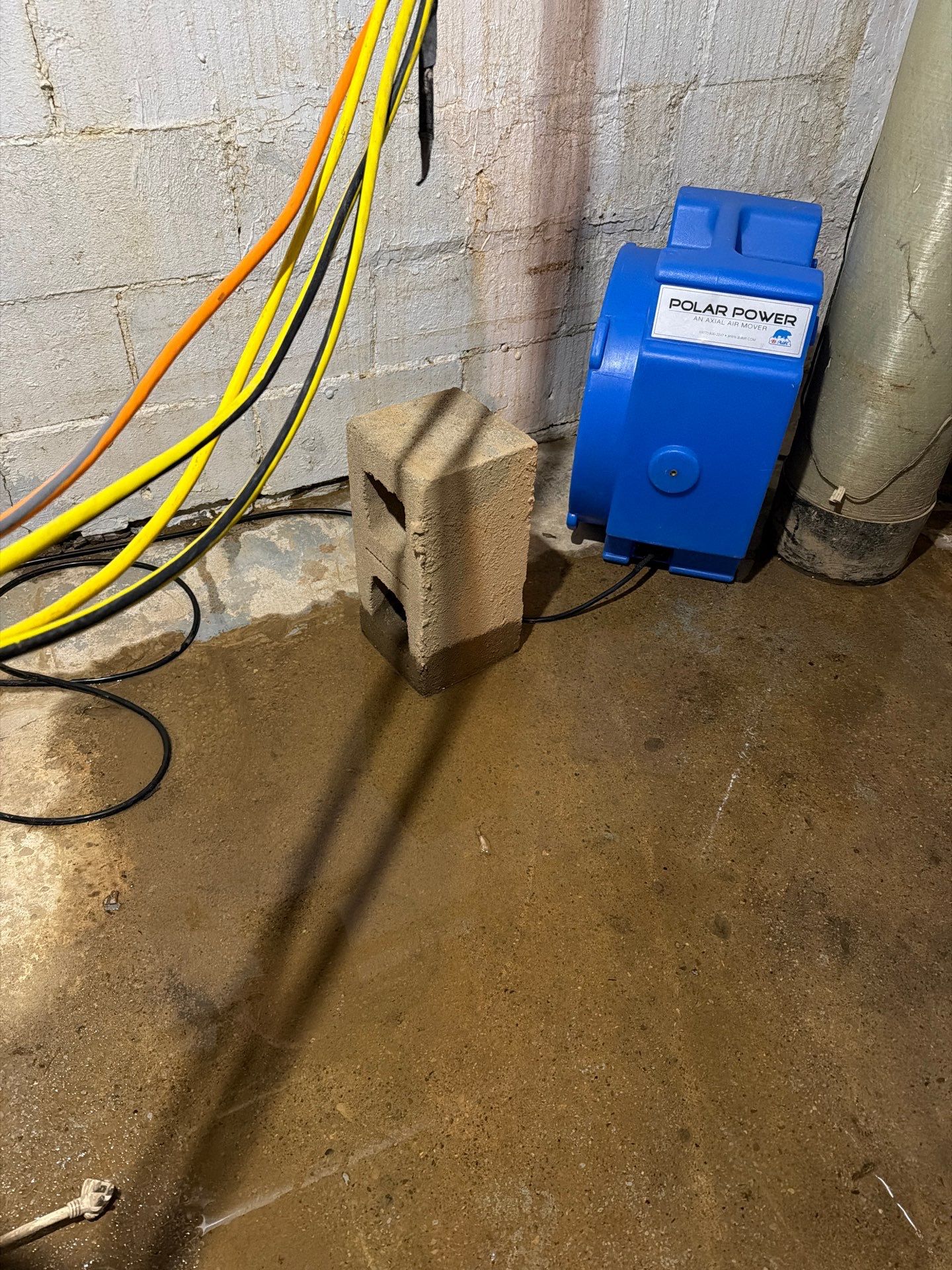
Step 1: Initial Call and Dispatch (0 to 15 Minutes)
- Call Cicero Water Restoration 24/7 dispatch. Average pickup time: under 60 seconds.
- Provide address, water source (clean supply line, appliance, sewage, storm), and approximate square footage affected.
- Confirm power status. If outlets are submerged, do not enter. Dispatcher will advise breaker shutoff at the main panel.
- ETA for Cicero and surrounding areas: 45 to 90 minutes for emergency response, 24 hours a day.
- Dispatcher logs IICRC water category (1, 2, or 3) based on source description for crew preparation.
- Photos of the affected area can be texted to dispatch for pre-arrival load planning. This shortens on-site setup by 10 to 20 minutes.
- If your loss is insurance-related, dispatch can begin the carrier notification process while the crew is en route.
Step 2: On-Site Assessment (Minutes 0 to 30 of Arrival)
- Lead technician performs walkthrough with thermal imaging camera (FLIR E6 or equivalent).
- Moisture readings taken at 6 to 10 points per affected room using a penetrating meter. Target dry standard: under 16% MC for wood, under 1% WME for drywall.
- Water classification confirmed: Category 1 (clean), 2 (gray), or 3 (black, including sewage).
- Class of loss assigned 1 through 4 based on evaporation load.
- Written scope and price estimate produced before any work begins. You sign authorization only after reviewing.
- Reference moisture readings are taken in unaffected rooms to establish a baseline for the structure. Typical Cicero interior baseline: 8 to 12% MC for framing lumber.
- Hidden moisture checks include wall cavities, subfloor seams, and behind cabinets. Borescope inspection is used when cavity access is limited.
Step 5: Controlled Demolition (Hours 4 to 8, If Required)
- Drywall cut at 2 inches above visible water line or moisture meter reading boundary, whichever is higher.
- Baseboards removed and labeled for reinstall when salvageable.
- Wet insulation extracted and disposed of per local Cicero waste regulations.
- Flooring assessed: glue-down LVP and tile often salvageable, laminate and engineered hardwood typically not.
- Debris hauled the same day. No piles left in your driveway overnight.
- Cabinet toe-kicks drilled with 2-inch holes for cavity airflow when full cabinet removal is not warranted.
- Tack strips and pad disposed of for Category 2 and 3 events. Pad replacement cost: $0.50 to $0.90 per sq ft.
Step 3: Containment and Safety Setup (Minutes 30 to 60)
- Affected zones isolated with 6-mil poly sheeting if Category 2 or 3.
- Negative air machines (HEPA, 500 to 2000 CFM) installed for contaminated water.
- Crew dons PPE: nitrile gloves, N95 or P100 respirators, Tyvek suits for sewage events.
- Contents inventoried and photographed for your water damage insurance claim documentation.
- Walk paths protected with corrugated floor runners and corner guards at 90-degree turns to prevent secondary damage during equipment movement.
- HVAC system shut down and supply or return registers in affected areas sealed with poly to prevent contamination spread.
Step 7: Antimicrobial Application and Final Clearance
- EPA-registered antimicrobial applied to all affected substrates for Category 2 and 3 losses.
- HEPA vacuuming of horizontal surfaces post-drying.
- Final moisture map produced. You receive a PDF report with before, during, and after readings.
- Reconstruction estimate provided if drywall, flooring, or paint work is needed.
- Post-remediation verification offered through a third-party hygienist for Category 3 losses or when occupants have respiratory sensitivities.
Step 4: Water Extraction (Hours 1 to 4)
- Truck-mounted extractors deployed for volumes over 100 gallons. Flow rate: up to 200 GPM.
- Portable extractors (Hydro-X or equivalent) used for tight spaces and stair runs.
- Weighted extraction tools used on carpet to remove bound moisture before drying phase.
- For Category 3 events such as a sewage backup, all porous materials including pad, drywall below the waterline, and contaminated insulation are removed and bagged.
- Standing water target: zero visible water within 4 hours of extraction start.
- Submersible pumps (1/2 HP to 2 HP) used for basement losses with standing depth over 2 inches.
- Extraction passes repeated until carpet weight matches dry reference samples within 10% tolerance.
What Affects Final Pricing
- Category of water. Category 3 can triple per-square-foot cost compared to Category 1.
- Square footage and number of affected rooms. Multi-floor losses require more equipment and longer monitoring.
- Material types. Plaster, hardwood, and dense subfloors require longer drying cycles than drywall and carpet.
- Access conditions. Crawlspaces, finished basements, and second-floor losses add labor hours.
- Time elapsed before mitigation. Losses untreated for over 72 hours often shift into mold remediation scope, adding $1,500 to $6,000.
- Contents handling. Pack-out, storage, and pack-back services are billed separately at $0.75 to $1.50 per sq ft of contents area.
For homeowners weighing immediate next moves, our breakdown of the first steps after water damage covers what to do in the 30 minutes before our crew arrives. Document everything, shut off the source if safe, and avoid running HVAC if sewage is present. Keep receipts for any emergency purchases such as fans, wet vacs, or temporary lodging. Most Cicero policies reimburse these under additional living expense or loss mitigation coverage when the claim is approved.
Step 6: Structural Drying (Days 1 to 4)
- Air movers placed at one unit per 10 to 16 linear feet of affected wall.
- Dehumidifiers sized at 1 LGR unit per 500 to 700 sq ft of affected area. Target grain depression: 30 to 40 GPP.
- Daily moisture monitoring. Readings logged and shared with you and your adjuster.
- Average drying time in Cicero homes: 3 to 5 days. Slab homes and dense materials may extend to 7.
- Equipment removed only when materials reach pre-loss dry standard, not before.
- Ambient conditions logged twice daily: temperature target 70 to 90 F, relative humidity below 60%.
- Specialty drying systems (Injectidry or equivalent) used for hardwood floors and wall cavities to avoid further demolition.
Pricing Specifications
- Emergency dispatch and assessment in Cicero: free if work is authorized, $150 to $250 inspection-only fee otherwise.
- Water extraction: $1.50 to $4.00 per sq ft depending on category and depth.
- Structural drying with equipment: $500 to $1,200 per day for typical residential losses.
- Category 3 sewage cleanup: $7 to $15 per sq ft due to PPE, disposal, and antimicrobial requirements.
- Average total Cicero residential claim: $3,000 to $8,000. Severe basement losses: $10,000 to $25,000.
- Most homeowners insurance policies cover sudden and accidental water damage. We bill your carrier directly and require only your deductible up front.
- After-hours surcharge: none. Cicero Water Restoration prices emergency response the same at 2 PM or 2 AM.
- Containment materials and PPE: $0.25 to $0.75 per sq ft, billed separately for Category 2 and 3 events.