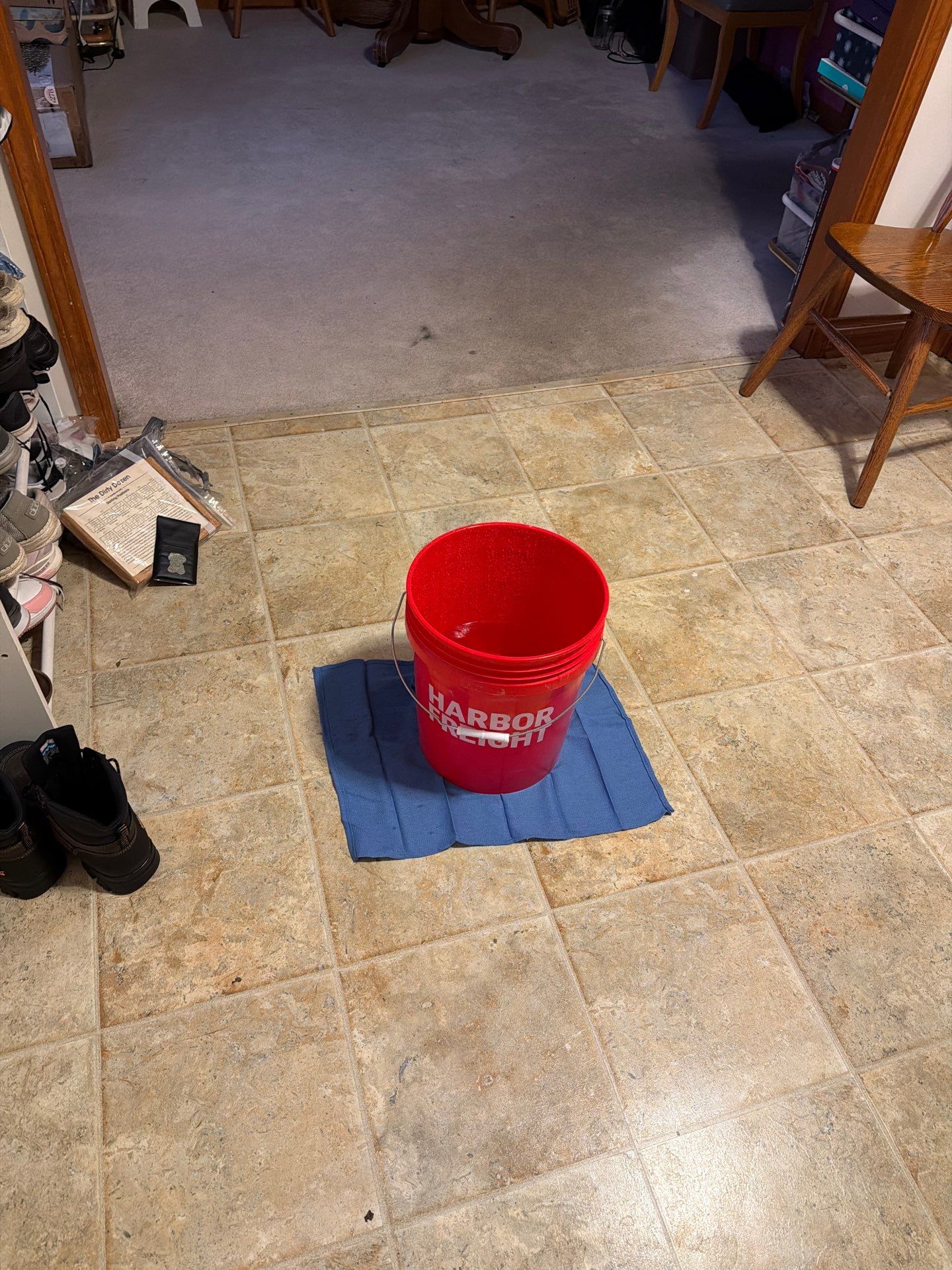
Step 1: Confirm Active Intrusion and Cut Risk (0 to 5 Minutes)
- Locate the entry point. Inspect the head jamb, side jambs, sill, and the wall 12 to 18 inches below the window.
- Kill electricity to the affected room at the breaker if water is within 24 inches of any outlet, switch, or light fixture.
- Photograph the active leak. Capture wide shots and close-ups at 1080p or higher. Insurance adjusters in Cicero expect timestamped evidence.
- Identify water category. Clear rainwater is Category 1. If it has passed through insulation or drywall for more than 24 hours, treat it as Category 2.
- Note wind direction and storm intensity. Driven rain at 30+ mph behaves differently than vertical rainfall and often reveals weaknesses in the head flashing first.
Step 2: Stop or Slow the Intrusion (5 to 20 Minutes)
- From inside, press a folded microfiber or cotton towel against the leak point. Replace every 10 to 15 minutes.
- If wind direction allows safe exterior access, apply a temporary patch. Use peel-and-stick flashing tape (6-inch width) over the head flashing or failed sealant joint.
- For broken glass or a blown-out sash, cover the opening with 6-mil polyethylene sheeting secured with 1.5-inch roofing nails and furring strips. Overlap the opening by 12 inches on all sides.
- Do not silicone-caulk over wet substrate. The bond will fail within 48 hours.
- Do not climb a ladder during sustained winds above 25 mph or active lightning. Wait for a lull or call Cicero Water Restoration for emergency board-up.
Step 7: Document for the Insurance Claim
- Maintain a moisture log: location, reading, date, time. Adjusters in Cicero request this format.
- Photograph every removed material before disposal. Bag samples for category testing if Category 2 is suspected.
- Save all receipts for tarps, plastic, fans, and rented equipment. These are reimbursable mitigation costs under most HO-3 policies.
- Request a written scope from your restoration contractor that references S500 IICRC drying standards.
- Record equipment runtime hours. Most policies reimburse drying equipment at a daily rate per unit, and accurate logs prevent disputes during the claim review.
Step 3: Extract Standing Water (20 to 45 Minutes)
- Use a wet/dry shop vac rated for at least 6 gallons. Extract the sill, the floor within a 4-foot radius, and any pooled water in the wall cavity if accessible.
- Lift carpet at the tack strip if water has migrated more than 12 inches from the window. Inspect the pad. Saturated pad rarely dries in place and is typically removed.
- Blot baseboards and trim. Do not pry them off yet unless visibly swelling.
- Empty the vac tank every 4 to 5 gallons. Overfilled tanks reduce suction by 40% or more and slow extraction speed.
If extraction reveals more than 2 square feet of saturated drywall or any sign of insulation involvement, this is the threshold to escalate. Our water extraction services use truck-mounted units that pull volumes a shop vac cannot reach.
Step 4: Inspect for Hidden Migration (45 to 90 Minutes)
- Use a pinless moisture meter on drywall. Readings above 17% indicate active moisture in gypsum.
- Check the wall cavity by removing the interior stop or trim. Look for wet fiberglass batt or wet OSB sheathing.
- Inspect the floor below, the ceiling on the next story down, and the exterior wall cladding. Storm water often travels 4 to 8 feet laterally before showing on a finish surface.
- For multi-story homes, refer to our breakdown on hidden leak detection behind walls for thermal imaging thresholds.
- Map every reading on a simple floor sketch. Mark dry zones at 8% to 12%, marginal zones at 13% to 16%, and wet zones above 17%. This map drives drying placement.
Step 6: Material Decisions (Hour 24 to Hour 72)
- Drywall reading above 16% after 48 hours of drying: cut a flood line 12 to 24 inches above the highest moisture mark.
- Insulation that was wet for more than 24 hours: remove and replace. Fiberglass loses R-value when compressed by water, and cellulose holds moisture indefinitely.
- Hardwood sill or window stool with cupping over 1/16 inch: refer to our guidance on whether to save or replace hardwood after water damage.
- Sheathing (OSB or plywood) with delamination or readings above 19%: structural review required.
- Painted MDF trim that has expanded more than 1/8 inch: replace. MDF does not recover its original profile after swelling.
Stop Conditions: When to Call a Professional
- Visible mold growth within 48 hours of the leak.
- Drywall sag, ceiling bow, or active dripping from a second-story window into a first-floor ceiling.
- Electrical contact with water.
- Saturation extending beyond 8 linear feet from the window.
- Storm damage that includes roof, siding, or multiple windows. See our storm damage restoration service for multi-system response.
- Repeat leaks at the same window after a prior repair. Cicero Water Restoration can perform a forensic water test to isolate the failure path.
Step 9: Post-Repair Verification
- Re-scan all repaired wall sections with the moisture meter 7 days after closing. Readings should match adjacent dry baselines within 2 percentage points.
- Inspect paint and joint compound for flashing, blistering, or hairline cracks. These indicate residual moisture trapped behind the finish.
- Check window operation. Sashes should slide or crank without binding. Binding suggests frame distortion from water exposure.
- Schedule a 30-day and 90-day follow-up inspection, especially through the next storm cycle in Cicero.
Step 5: Controlled Drying Setup (Hour 2 to Hour 6)
- Place one air mover per 10 to 16 linear feet of wet wall. Angle at 15 to 45 degrees toward the surface.
- Position a low-grain refrigerant (LGR) dehumidifier rated for the affected square footage. A 70-pint unit covers approximately 1,000 to 1,200 sq ft of light damage.
- Target indoor relative humidity of 30% to 40%. Monitor with a digital hygrometer every 8 hours.
- Drill 1/2-inch weep holes in the bottom plate of the wall cavity if interior drying stalls after 24 hours. This is a professional step in most cases.
- Close exterior windows and doors in the affected zone. Open interior doors to allow dehumidified air to circulate through adjacent rooms.
- Maintain ambient temperature between 70F and 85F. Drying efficiency drops sharply below 65F.
Step 8: Permanent Repair Sequence
- Replace failed flashing or install new head flashing with a minimum 4-inch upturn behind the WRB (weather-resistive barrier).
- Reseal the perimeter with a high-grade polyurethane or hybrid sealant rated for movement of plus or minus 25%.
- Verify weep holes are clear. A 1/8-inch wire works for vinyl windows.
- Reinstall insulation, hang new drywall, tape, mud, prime, and paint. Allow 7 to 14 days for full repair depending on scope.
- Perform a controlled water test after sealant cures. Run a garden hose at low pressure across the head, then the jambs, then the sill, for 5 minutes each. Monitor the interior for any reappearance.